
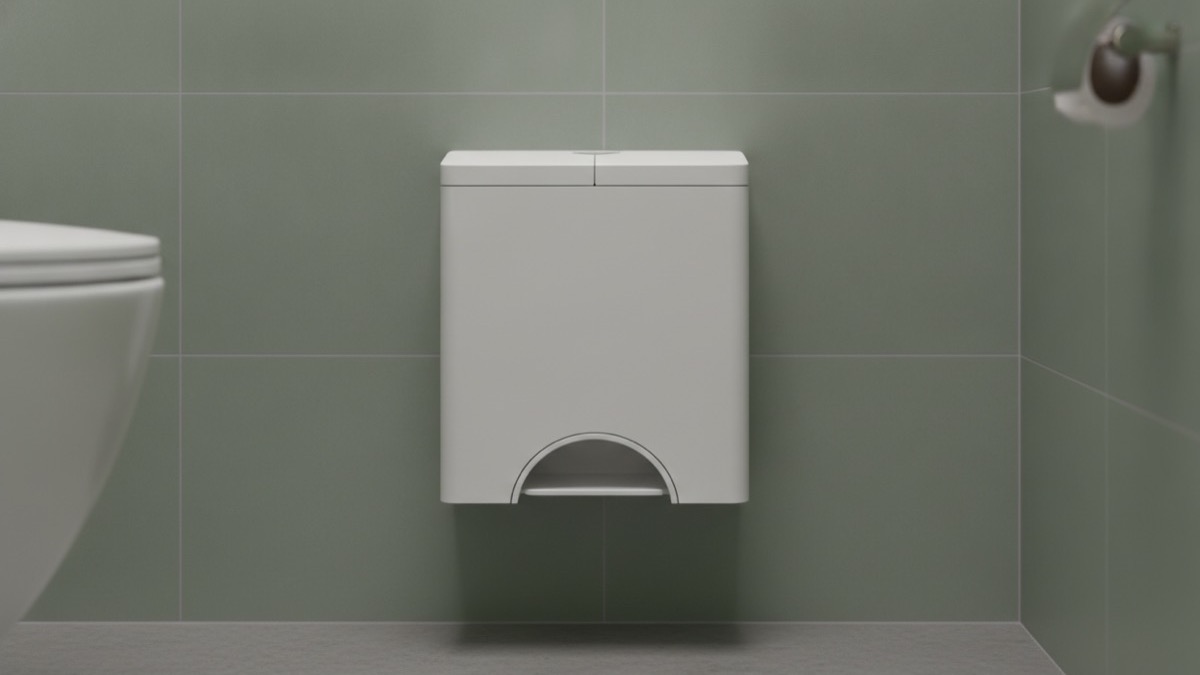
- Commercial sanitary bins are typically serviced weekly, fortnightly or every four weeks.
- The right frequency depends on footfall, the number of units and the type of site.
- A quiet office won't need the same schedule as a busy salon or venue.
- Over-servicing is a common, quiet way to overpay; under-servicing risks hygiene and compliance.
- A good provider recommends a frequency based on your actual usage, not a default contract.
Typical service frequencies
Most UK commercial sanitary bins are serviced on one of three cycles:
- Weekly for busy, high-footfall sites, venues, large offices, hospitality and healthcare.
- Fortnightly for moderate use, a common default for many small and mid-sized businesses.
- Every four weeks for quiet, low-use premises with light traffic.
Modern sanitary bins are designed to lock in odour and stay hygienic between collections, so the right cycle is about matching capacity and hygiene to how busy you are, not emptying for the sake of it.
What determines the right frequency
- Footfall. The more people using the washroom, the more often bins fill.
- Number of units. More bins spread the load; a single bin in a busy site fills faster.
- Type of site. A salon, gym, pub or clinic tends to need more frequent visits than a quiet office.
- Peaks. Seasonal or event-driven spikes can justify a temporary step up.
Want the right schedule, not a default one?
Tell us about your premises and we'll match you with one vetted local provider who recommends a frequency based on your actual usage. Free, no obligation.
Signs you need more, or fewer, collections
Step up the frequency if: bins are full or overflowing before the next visit, you've had complaints, or your site has got busier.
Step down if: bins are barely used at each collection and your site is genuinely quiet. Paying for weekly visits on a bin that's a quarter full is one of the most common ways businesses quietly overpay. It's worth reviewing against what the service should cost.
Frequency and compliance
There's no single legal number of collections, but the underlying duty is to keep washrooms hygienic and dispose of sanitary waste correctly. In practice that means bins shouldn't be left to overflow, and waste must be collected by a licensed carrier with the right paperwork. The right frequency is the one that reliably keeps your bins from overflowing between visits. For the wider rules, see our sanitary bin requirements guide.
Getting the right schedule
The simplest approach is to have a provider assess your site and recommend a cycle, then review it after a few months against real usage. A good provider does this rather than defaulting everyone to the same contract. If you'd rather not ring round, get matched with one local provider who'll set a schedule that fits.
Frequently asked questions
How often should sanitary bins be emptied in the UK?
Most commercial sanitary bins are serviced weekly, fortnightly or every four weeks. The right frequency depends on how busy the site is and the number of units. Busy or high-footfall sites need weekly collections; quiet premises can often use a longer cycle.
Is there a legal minimum frequency for emptying sanitary bins?
There's no single legal number, but the duty is to keep washrooms hygienic and dispose of sanitary waste correctly via a licensed carrier. In practice, bins should not be left to overflow, so the right frequency is whatever reliably prevents that.
Can I reduce how often my sanitary bins are collected to save money?
Yes, if your bins are consistently under-used at each visit. Over-servicing a quiet site is a common way to overpay. A provider can recommend a frequency that matches your usage without risking hygiene or compliance.
Do sanitary bins smell between collections?
Modern commercial sanitary bins are designed to contain odour and stay hygienic between visits, often with antibacterial protection. On the right schedule for your footfall, they shouldn't be noticeable.