
- There's no single law titled "sanitary bins", but two duties combine to make them a practical requirement.
- The Workplace Regulations 1992 require suitable, hygienic toilet facilities; the Environmental Protection Act 1990 governs the waste.
- The duty sits with the employer or occupier, even if a provider does the servicing.
- Sanitary waste is offensive waste and must be collected by a licensed carrier, not put in general rubbish.
- Getting compliant is cheap and quick, far cheaper than the risk of getting it wrong.
The short answer
Yes. If your business has premises with toilets, you're expected to provide a hygienic way to dispose of sanitary waste. People often look for a single regulation that says "you must have a sanitary bin" and can't find one, then assume they're off the hook. That's the trap. The requirement comes from two duties working together: your obligation to provide suitable toilet facilities, and your obligation to dispose of the resulting waste correctly.
Which laws actually apply
Two pieces of UK law do the heavy lifting here.
The Workplace (Health, Safety and Welfare) Regulations 1992
These require employers to provide suitable and sufficient toilet and washing facilities for staff, kept clean and properly maintained. A toilet used by anyone who might produce sanitary waste, without a hygienic means of disposal, isn't really "suitable". That's the first pillar.
The Environmental Protection Act 1990 (duty of care)
Sanitary waste is classed as offensive waste: non-hazardous but unpleasant, and it must be kept separate from general rubbish. Under the duty of care, you must ensure your waste is handled only by a licensed carrier and disposed of correctly, and keep documentation (waste transfer notes) that proves it. You can read the fuller breakdown on our sanitary bin requirements page.
Who is responsible
The responsibility is the employer's, or the occupier of the premises. That's true whether you own the building or rent it. You can, and almost always should, appoint a licensed washroom provider to supply the bins, run the collections and handle the paperwork, but the underlying legal duty doesn't transfer to them. If the waste is mishandled, it's your business that's on the hook, not the carrier.
Not sure where your business stands?
Tell us about your premises and we'll match you with one vetted, licensed local provider who can confirm exactly what you need. Free, no obligation, 60 seconds.
Edge cases people ask about
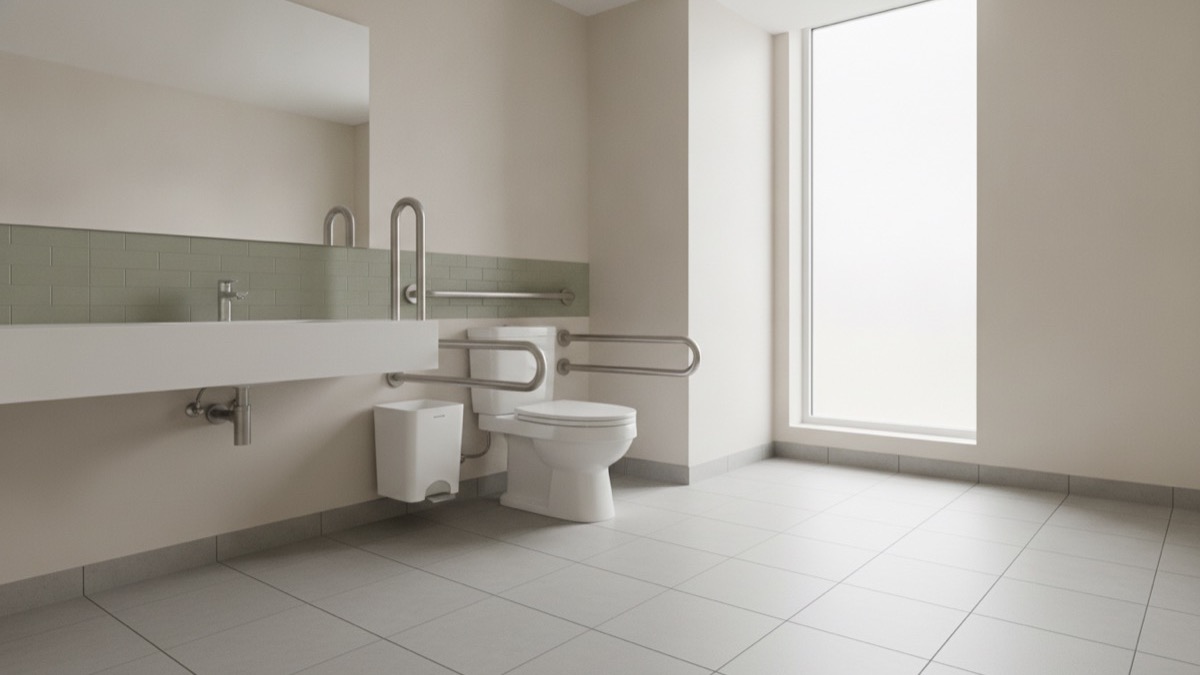
- An all-male workforce. You still need suitable toilets, and many businesses provide bins for incontinence products. If the public or visitors use your toilets, provide sanitary disposal. Accessible toilets should always have a bin.
- A home office or a business with no premises. The workplace welfare duties apply to premises you provide for staff. A genuine one-person home office is different, but the moment you have staff or public using toilets on premises you control, the duty applies.
- Baby-changing facilities. These need a nappy bin, which is also offensive waste and needs licensed collection.
- Gender-neutral toilets. Increasingly fitted with a bin in every cubicle, which is the simplest way to stay compliant and inclusive.
What happens if you don't comply
Two things go wrong. First, you may fall short of the workplace welfare requirements, which can attract enforcement attention. Second, and more commonly overlooked, if sanitary waste ends up in the general bin you've breached your duty of care for offensive waste, an offence with real consequences and no paperwork to defend yourself. Beyond the legal risk, an uncovered or overflowing bin is exactly the sort of thing that undermines a clean, professional workplace and gets noticed by staff and customers.
The reassuring part: compliance is inexpensive. A small business typically pays a modest annual fee for a fully managed service.
How to comply the easy way
You don't need to become an expert in waste law. The practical route is short:
- Put a sanitary bin in every female cubicle and every accessible toilet (add nappy bins where you have baby-changing).
- Appoint a licensed carrier to service them on a schedule and handle the waste transfer paperwork.
- Compare a couple of quotes so you don't overpay, the national providers are often the priciest.
The fastest way to do all three is to get matched with one vetted local provider rather than ring round yourself.
Frequently asked questions
Are sanitary bins a legal requirement in the UK?
Not by a single named law that says "you must have a sanitary bin", but the combined effect of the Workplace (Health, Safety and Welfare) Regulations 1992 and the duty of care for offensive waste under the Environmental Protection Act 1990 means employers are expected to provide hygienic sanitary waste disposal. In practice that means sanitary bins in female and accessible toilets, emptied by a licensed carrier.
Who is responsible for providing sanitary bins at work?
The employer or the business that occupies the premises. You can appoint a licensed washroom provider to supply and service the bins, but the legal duty to provide compliant facilities and dispose of the waste correctly stays with your business.
Do I need sanitary bins if I only employ men?
You still need suitable toilet facilities, and if members of the public or visitors use your toilets you should provide sanitary disposal. Many all-male workplaces also provide bins for incontinence products. Any accessible toilet should have a bin, and baby-changing facilities need a nappy bin.
What happens if a business doesn't provide sanitary bins?
You risk breaching workplace welfare requirements and, if sanitary waste ends up in general rubbish, your duty of care for offensive waste. That can mean enforcement action, and it undermines a clean, professional workplace. The cost of a compliant service is small next to the risk.
This is general guidance, not legal advice. For your specific obligations, check the HSE guidance or speak to a matched provider.