
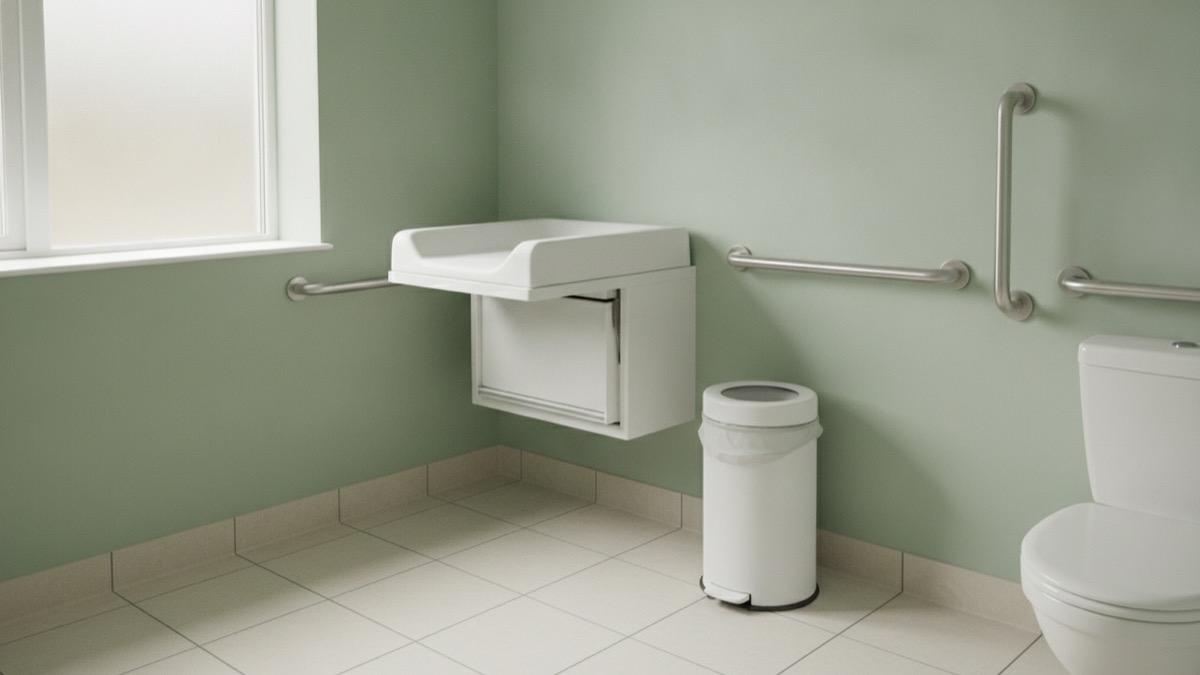
- Sanitary and nappy waste are both "offensive" waste: non-infectious but unpleasant.
- Clinical waste is potentially infectious or hazardous, and controlled far more tightly.
- Offensive waste goes in yellow-and-black tiger bags; infectious clinical waste in orange.
- Using clinical disposal for ordinary sanitary waste means paying more than you need to.
- Match the bin to the waste, and you stay both compliant and cost-efficient.
Sanitary waste
Sanitary waste is feminine hygiene waste: sanitary towels, tampons and liners from washroom sanitary bins. It's classed as offensive waste, meaning non-clinical and non-infectious, but unpleasant to handle. It needs a dedicated sanitary bin and collection by a licensed carrier, but it doesn't need the tight controls of clinical waste.
Nappy waste
Nappy waste, from baby-changing facilities or adult incontinence products, sits in the same offensive-waste category as sanitary waste. It's handled the same way: a proper nappy or offensive-waste bin, a licensed collection, and a transfer note. The one exception is waste from someone with a known infection, which can be reclassified as clinical.
Not sure which bins you need? A vetted local provider will match the right service to your site, free to compare.
Clinical waste
Clinical waste is the different one. It's waste that's potentially infectious or hazardous: used dressings from a treatment room, sharps, or anything contaminated with a known infection. It's tightly controlled, goes in orange (infectious) or other specified bags, needs consignment notes, and costs significantly more to dispose of. Most offices, shops, gyms and restaurants never produce it. Healthcare and some care settings do.
Quick comparison
| Sanitary | Nappy | Clinical (infectious) | |
|---|---|---|---|
| Category | Offensive | Offensive | Hazardous / clinical |
| Infection risk | No | No | Yes |
| Bag colour | Yellow / black stripe | Yellow / black stripe | Orange |
| Paperwork | Transfer note | Transfer note | Consignment note |
| Relative cost | Low | Low | High |
Which bins does your business need?
For the vast majority of workplaces, the answer is simple: sanitary bins in the women's and accessible toilets, and nappy bins wherever there's baby-changing. Both are offensive-waste services, both are low-cost, and both are covered by the same straightforward compliance.
You only step into clinical-waste territory if your premises genuinely produces infectious waste, such as a clinic or treatment room. If a provider is charging you clinical rates for ordinary sanitary waste, that's worth questioning, because you're almost certainly paying too much.
Frequently asked questions
Is nappy waste the same as clinical waste?
No. Nappy waste is offensive waste, non-infectious and handled like sanitary waste. Clinical waste is potentially infectious or hazardous and controlled far more tightly. The exception is nappy or incontinence waste from someone with a known infection.
Do I need clinical waste bins in a normal office?
Almost never. Offices, shops, gyms and restaurants produce sanitary and nappy waste, both offensive waste. Clinical waste bins are only needed where genuinely infectious or hazardous waste is generated, such as a treatment room.
What colour bag is clinical waste?
Infectious clinical waste goes in orange bags, while offensive sanitary and nappy waste goes in yellow bags with a black stripe. The colour tells you which category, and which cost, applies.
Am I overpaying if my sanitary waste is treated as clinical?
Very likely. Clinical disposal costs significantly more. Ordinary workplace sanitary waste is offensive waste, so if you're being charged clinical rates for it, it's worth reviewing your service.