
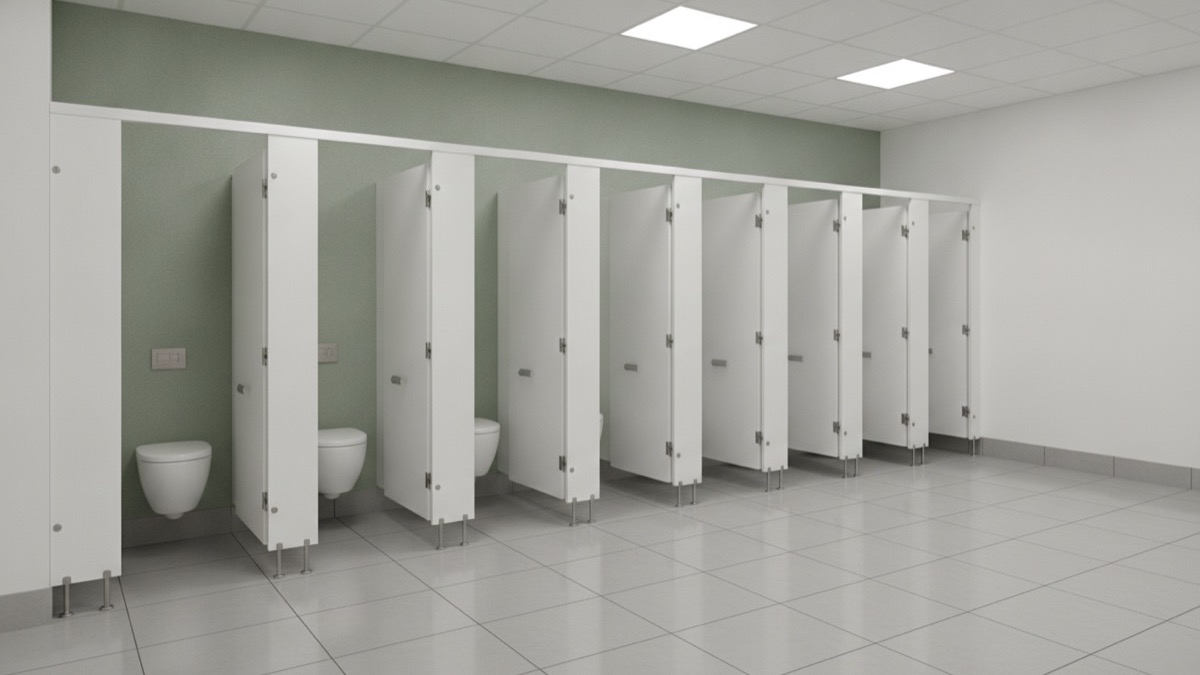
- The baseline rule: one sanitary bin per female toilet cubicle.
- Include accessible and unisex cubicles, they need bins too.
- Busy, high-footfall sites may need larger bins or more frequent servicing rather than more units.
- Quiet sites shouldn't pay for more bins or visits than they use.
- Getting the count and frequency right is the easiest way to avoid both overflow and overpaying.
The simple rule
The baseline most businesses work to is straightforward: one sanitary bin per female toilet cubicle, plus one in every accessible or unisex cubicle. That single rule gets the overwhelming majority of workplaces to the right answer.
Everything else is just adjusting for how busy the site is.
Start with your cubicles
Count the cubicles in your female toilets. Each one should have its own bin, positioned within easy reach of the toilet. Sharing one bin between two cubicles isn't good practice: it's less hygienic, and it leads to the overflow and complaints you're trying to avoid.
Want the count and frequency set correctly? A vetted local provider will size it to your site, free to compare.
Adjust for footfall
Footfall changes how quickly bins fill, not usually how many you need. A busy city-centre venue and a quiet office might both have four cubicles, but the busy site's bins fill far faster.
The fix for a busy site is usually more frequent servicing or larger-capacity bins, rather than squeezing in extra units. For a quiet site, the opposite applies: don't pay for weekly visits a fortnightly schedule would cover comfortably.
Don't forget accessible and unisex toilets
Accessible toilets need a sanitary bin, and so do unisex or gender-neutral facilities, since anyone might need to dispose of sanitary or incontinence products. It's an easy one to overlook and a poor one to get wrong. Increasingly, businesses also provide a bin in male cubicles for incontinence needs, which is good practice.
Worked examples
- Small office, 3 female cubicles + 1 accessible: 4 bins, likely fortnightly or four-weekly servicing.
- Busy restaurant, 4 female cubicles + 1 accessible: 5 bins, with weekly servicing to keep up with footfall.
- Large workplace, 8 female cubicles + 2 accessible: 10 bins, frequency set by how heavily the site is used.
Nail the count from your cubicles, then let real footfall set the frequency. That combination keeps you hygienic without overpaying.
Frequently asked questions
How many sanitary bins do I legally need?
There's no single fixed number in law, but the accepted standard is one bin per female toilet cubicle, plus accessible and unisex cubicles. The underlying duty is to provide hygienic disposal wherever it's needed.
Should every toilet cubicle have its own sanitary bin?
Yes, that's best practice for female, accessible and unisex cubicles. Sharing a bin between cubicles is less hygienic and leads to overflow. Each cubicle having its own bin is the reliable approach.
Do busy sites need more sanitary bins?
Usually they need more frequent servicing or larger bins rather than more units. The number of bins follows your cubicle count; footfall determines how often those bins should be emptied.
Do accessible and unisex toilets need sanitary bins?
Yes. Accessible and unisex or gender-neutral cubicles should each have a sanitary bin, since anyone may need to dispose of sanitary or incontinence products. It's easily overlooked but important.